
University Presentation Showcase: Graduate Poster Gallery
Preview
Creation Date
Spring 2025
Major
Recreation and Park Administration
Department
Recreation and Park Administration
Degree
Graduate
Mentor
Dr. Brian Clark
Mentor Department
Recreation and Park Administration
Abstract
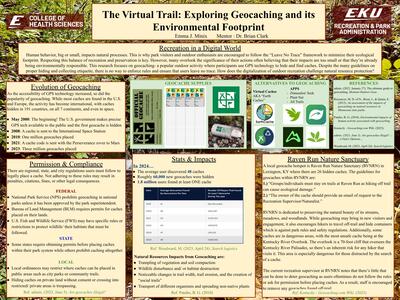
Geocaching is a real-world outdoor treasure-hunting game that uses GPS and other navigational means to hide and seek containers known as caches. With over three million active users and countless caches hidden worldwide (and even in space), geocaching has become one of the most popular outdoor recreation apps. The premise of the game is enticing to any outdoor- enthusiast, but there are many reasons why it also appeals to the average hiker. To begin, it’s a family-friendly activity that encourages people of all ages to get outdoors, explore, and exercise. A cache can be hidden anywhere, whether it be on the side of the road or atop a mountain, which means that it’s readily obtainable. Furthermore, it offers users a sense of community similar to other recreational activities like backpacking or rock climbing.
In my research, I want to focus on the geocaches hidden within natural areas and parks. While there are lively components of the game, it’s significant to note that it undoubtedly alters the way that park visitors move and behave which can increase the disturbance of nature. Even though guidelines exist for hiding caches in public areas such as parks, they oftentimes do not deter users from placing them off-trail, which can be both destructive and dangerous. This practice raises certain questions. First, are there better app alternatives that are less obstructive such as PlantNet, iNaturalist/ seek, and AllTrails? Second, just how many challenges does the digitalization of outdoor recreation create for protecting natural resources?