
Files
Download Poster (796 KB)
Description
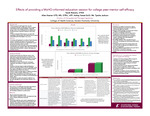
As an occupational therapy student, I recognized the support our profession can offer to assist with various student and faculty needs across campus, specifically peer mentor programs. A thorough literature review illustrated limited representation for peer mentor roles, expectations, and potential impact on retention. Along with these findings, it was revealed that academic outcomes improve with involvement in evidence-based interventions as well as support for the Model of Human Occupations (MoHO) to understand and support human well-being.With this in mind, this study sought to develop and implement an evidence-based education session to identify and improve resources for peer mentors and demonstrate how to apply MoHO in post-secondary education mentor services. A survey was conducted before and after implementation of the 30 minute MoHO-based education session to better understand the thoughts and feelings associated with the role of being a mentor, skill development, and self-efficacy. Participation in the occupational therapy led activity not only showed an improvement in individual outcomes but also demonstrated the positive effect in use of metacognitive strategies to improve self-efficacy and performance in peer mentor and student-facing workers roles.
Graduation Date
1-1-2024
Disciplines
Occupational Therapy
Degree Type
Open Access Capstone
Document Type
Poster
Site Mentor
Allen Keener, Ashley Sweat, Tyesha Jackson

Comments
View Sarah Roberts's Capstone Poster Presentation.