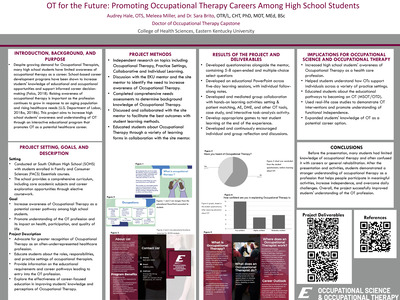
-
Empowering Staff and Caregiver through Occupational Therapy Education and Leadership at Hope Therapy Center
Natalie K. Antle
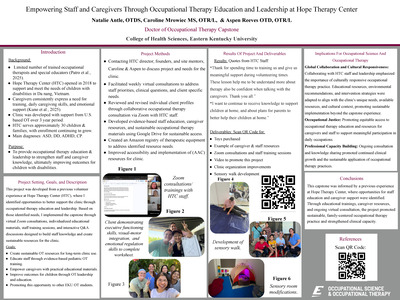
My doctoral capstone was completed with Hope Therapy Center (HTC), a pediatric clinic in Da Nang, Vietnam that is part of a Christian-based nonprofit organization providing free therapy services to children with disabilities and their families. This project focused on the ACOTE areas of education and leadership. It was informed by a previous experience at HTC where I observed a need for additional staff education, caregiver support, and sustainable occupational therapy resources. Those observations guided the development of my capstone and helped ensure the project addressed the clinic's greatest needs.The purpose of this capstone was to strengthen staff knowledge of pediatric occupational therapy while supporting caregivers in carrying over therapeutic strategies at home. Throughout the project, I developed and presented educational trainings on topics including documentation, goal writing, caregiver education, sensory processing, and intervention strategies. I also created caregiver handouts, treatment resources, and a digital resource library with evidence-based materials that staff can continue to use. Additional recommendations were provided to improve clinic organization, enhance the sensory environment, and increase access to therapeutic equipment.The effectiveness of the project was evaluated through staff participation, implementation of the educational materials, and feedback regarding the usefulness of the resources. These outcomes demonstrated increased confidence in applying occupational therapy principles and reinforced the value of providing sustainable educational resources. The project addressed needs identified through the initial needs assessment by improving access to practical tools, supporting caregiver involvement, and increasing staff knowledge to better serve children and families.This capstone strengthened the ongoing partnership between Eastern Kentucky University and Hope Therapy Center while demonstrating leadership through collaboration, education, problem-solving, and the development of sustainable resources. The project advanced occupational therapy by promoting evidence-based pediatric practice, supporting culturally responsive care, and increasing access to occupational therapy knowledge in an emerging practice setting. By equipping staff and caregivers with practical resources they can continue using beyond the completion of the capstone, this project established a foundation for continued collaboration with future Eastern Kentucky University occupational therapy doctoral students and contributed to long-term support for children and families served by HTC.
-
Enhancing OT Student Engagement Through Universal Design for Learning
L. Addie Asher
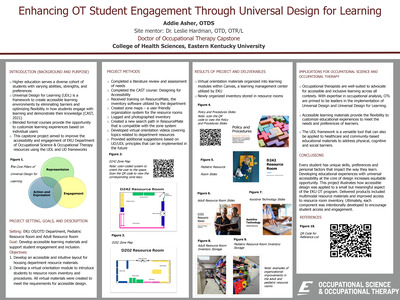
This capstone project took place at Eastern Kentucky University in the Occupational Science & Occupational Therapy Department with a primary ACOTE focus area on education. The goal was to address student engagement and accessibility by improving utilization of department resources. Universal Design for Learning (UDL) was the chosen framework to develop this project. UDL empowers learners by removing barriers and providing flexibility in how students engage with content and demonstrate knowledge (CAST, 2021). Universal Design principles were also utilized as this project included both virtual and on-campus components. Project elements were intentionally designed to consider diversity in student skills, preferences, and personal factors.
The first objective was to optimize resource room layout with intuitive improvements, introducing design elements that ensure the space is useable by a wide range of individuals. A color-coded zone system was created to simplify layout and organization in each room. Essential information was conveyed through multiple modes including wayfinding signs, pictorial labels and instructional text. The second objective was to create accessible orientation materials that provide information on resource room inventory and procedures. Materials were developed and organized into modules in Canvas, the virtual platform utilized by EKU. In accordance with UDL, these materials allow choice in how content is perceived. Materials include informational videos with optional captioning and alternative text, transcripts, slide decks, and virtual tours. Canvas materials are now available for distribution to first year students. This project illustrates how accessible design has enhanced a small but meaningful aspect of the student experience.
Link to presentation: https://youtu.be/0UibMJRURFI
-
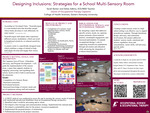
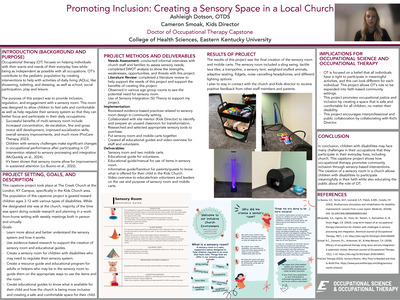
Designing Inclusions: Strategies for a School Multi-Sensory Room
Sarah K. Barker
The purpose of the ALE and Capstone Project was to address the predetermined need for a sensory room in Bullitt East High School stated by the ECE Department Chair. My project focused on education, advocacy, and program development by promoting neurodiverse inclusion and increasing awareness of occupational therapy among staff and the community. A needs assessment and SWOT analysis confirmed the value of creating a sensory room and identified an appropriate location within the school. Students will learn to regulate their emotions in a safe and controlled environment, improve focus and regulation, practice self-advocacy skills, further develop motor skills, and build essential life skills to improve classroom and community behavior and performance. To support implementation, I organized a community fundraiser, researched evidence-based sensory equipment, and developed educational pamphlets and flyers to guide staff in effectively using the space. Project success was evaluated by the completion of the sensory room, installation of equipment and educational materials, and approval from the occupational therapist and site mentor. The project also emphasized the importance of individualized sensory support rather than a one-size-fits-all approach and identified staff training and scheduling as areas for continued improvement. This project strengthened my leadership skills through collaboration, communication, adaptability, and problem solving while reinforcing my commitment to serving the students in the Moderate to Severe Disabilities (MSD) classroom. By creating a research-informed, client-centered sensory space, this project promotes evidence-based occupational therapy practice, supports meaningful student participation, and expands advocacy and awareness of occupational therapy within the school and community.
-
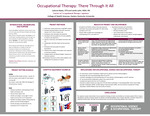
Occupational Therapy: There Through It All
LeAnne Bates
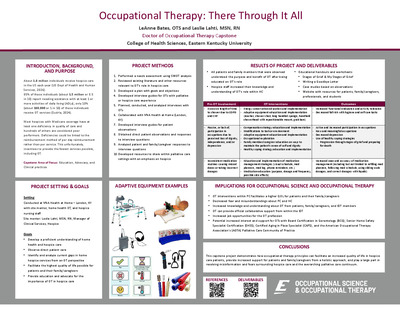
'Occupational Therapy: There Through It All' is a Doctor of Occupational Therapy Capstone project in collaboration with VNA Health at Home in London, Kentucky. The Applied Leadership Experience focused on patients, and their family members or caregivers, receiving home hospice care. The primary ACOTE focus areas were education, advocacy, and clinical practice. The purpose of the project was to facilitate an increased quality of life in home hospice patients by determining the gaps of care present for patients that do not receive occupational therapy (OT) services, provide education about OT’s role in hospice care, and creating educational resources for patients and providers. A comprehensive needs assessment, literature review, and collaboration with the site mentor identified a significant gap in hospice patients receiving occupational therapy services. Many patients or staff members had limited knowledge and understanding about the OT profession and it’s wide scope of practice. Current literature addresses that there is a universal deficiency of understanding the wide scope of practice in OT along with misunderstandings about the PCC and hospice care. This project addressed the identified need of education by sharing student created resources along with other support resources from various associations (American Occupational Therapy Association and National Hospice Association). The Capstone project consisted of interviewing OTs with experience in palliative care including hospice, completing direct patient observations on home health and home hospice case load, educating hospice patients, family/caregivers, and staff, interviewing home hospice patients and family members/caregivers, and creating educational resources for patients and professionals. The project demonstrated positive outcomes by increasing students' ability to accurately define occupational therapy, identify multiple practice settings, describe the role of occupational therapists, and recognize OT as a potential career option. The educational resources developed for the school provide opportunities for continued student learning beyond the completion of the Capstone project. Throughout the Applied Leadership Experience, leadership was demonstrated through collaboration with the site mentor, evidence-based project development, effective communication, and the facilitation of engaging educational experiences tailored creation of educational resources on a topic that is lacking in resources directed towards OT, and providing literature that supports OT within the PCC as an evidence based practice. By addressing the need identified through the literature review and needs assessment, the project supports occupational therapy advocacy and demonstrates the value of OT within the PCC, specifically home hospice care, by bridging the gap of care seen in patients who do not receive OT services.
-
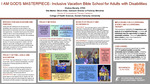
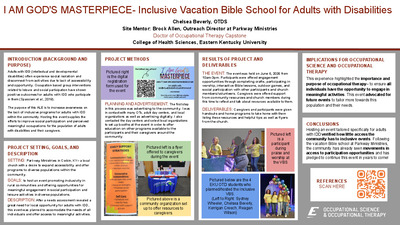
I Am God's Masterpiece- Inclusive Vacation Bible School for Adults with Disabilities
Chelsea Lee M. Beverly
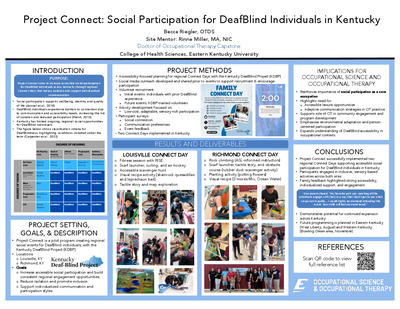
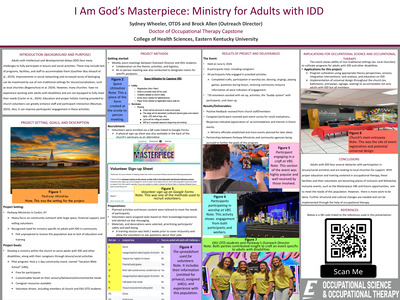
A SWOT analysis revealed a substantial need of local events for adults with IDD, therefore, the goal of this capstone project was to host an event promoting inclusivity in rural communities and offering opportunities for meaningful engagement in social participation and leisure activities in diverse populations. I specifically focused on the community impacts of this project, what the needs were for this area, and how this could benefit the community now and in the future. This event was held on June 6, 2026 from 10am-3pm. Participants were offered engagement opportunities through completing crafts, participating in worship, interactive Bible lessons, outdoor games, and social participation with other participants and church members/volunteers. Caregivers were offered support from community resources and church members during this time to reflect and talk about resources available to them. Caregivers and participants were given handouts and home programs to take home with them listing these resources and helpful tips as well as flyers from the church. This experience highlighted the importance and purpose of occupational therapy– to ensure all individuals have the opportunity to engage in meaningful activities. This event was a step towards accommodating future events to tailor more towards this population and their needs. Advertising, hosting, and communicating with others about this event was a step needed to bridge the gap in access to opportunity for the participants. The hope of this project is that the work put into this event transfers to other events and inspires others to better accommodate community involvement.
-
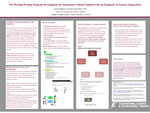
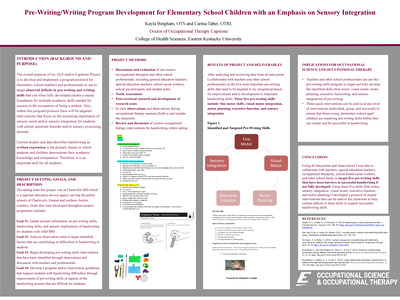
Pre-Writing/Writing Program Development for Elementary School Children with an Emphasis on Sensory Integration
Kayla A. Bingham
For my Capstone project and Applied Leadership Experience I focused on the importance of handwriting in elementary school children. So, the practice setting I chose to complete my project at was three elementary schools in Petoskey, Michigan. Also, my primary ACOTE focus area for this specific project was program development.
The goals of my capstone includes: Gathering present information (research, work samples, and classroom observation) of pre-writing skills, hand writing skills, and sensory implications of handwriting for students with ASD/SPD, analyze observation notes to target identified factors that are contributing to difficulties in handwriting in students, develop pre-writing skills interventions that have been identified through observations, and develop a program and/or intervention guidelines that support students with handwriting difficulties through improvement of pre-writing skills or aspects of the handwriting process that are difficult for students.
Through collaboration with school professionals and teachers I completed a needs assessment. This needs assessment provided me with data that suggests developing a program and/or protocol that targets pre-writing skills. Teachers and professionals within these elementary schools expressed concerns with several writing skills that when severely underdeveloped, but not yet at the level for occupational therapy intervention can start impacting success in handwriting instruction. Some examples of these pre-writing skills that may be underdeveloped include: poor stamina, poor focus, underdeveloped hand arches, sensory seeking or sensory avoidance, etc.
Through classroom observations, occupational therapy session observations, article review, and teacher and staff interviews I was able to develop a deliverable that is a handout that targets five identified pre-writing skills (fine motor, motor planning, sensory integration, visual motor, and executive function) and layouts simple interventions to start developing these pre-writing skills and help improve success in beginning handwriting instruction.
Throughout my Capstone and ALE experience I was able to demonstrate leadership by educating and providing the three schools I was at with my finished project. I was able to show the school professionals my program development and how to use the “warning signs” as a way to guide the user on what interventions to focus on. I also think my project advanced the profession of occupational therapy by making my final program/protocol development available for all levels of intervention, so available at the individual, small group, and universal level.
My capstone project was able to meet the need that was identified in my needs assessment and literature review. I also think that my capstone project helped me become versed in all handwriting interventions and what warning signs to look for and how handwriting can impact almost all occupations of being a student.
Link to presentation: https://youtu.be/Tj48g4Un0IU
-
Improving Access to Therapeutic Knowledge: Caregiver Education for Children with Cerebral Palsy in Vietnam
Hallei N. Bittlinger
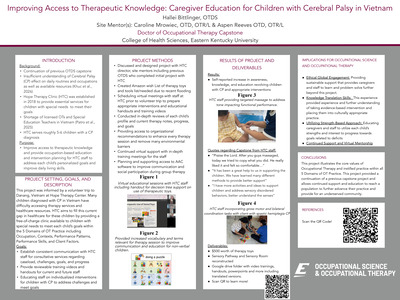
My doctoral capstone was completed at Hope Therapy Center (HTC), located in Da Nang, Vietnam through a virtual applied leadership experience. The primary ACOTE focus area for my capstone project included education and leadership. The primary goal of this capstone includes sustainably improving the knowledge and skills required for intervention planning for children with Cerebral Palsy (CP). Related goals include, developing training resources for HTC staff to review to understand CP and the effect it has on occupational performance, as well as providing virtual consultations for the current client caseload to enhance current practices and provide evidence-based interventions into the present sessions.
Hope Therapy Center is a nonprofit organization that aims to provide therapy and special education to children in need at no cost to the family. This organization is headed by Orphan Voice is a Christian-driven organization that provides a range of services and resources throughout Southeast Asia. This capstone project was inspired by a previous OTDS capstone completed by Aspen Reeves and aims to provide continued support and increased awareness of the need for occupational therapy services for children in Vietnam.
The effectiveness of this capstone project was measured through self-reported pre and post capstone surveys. The surveys discussed confidence levels in supporting children with CP, knowledge and understanding of evidence-based interventions for children with CP and more. Measurable outcomes also include the depth and diversity of the handouts, virtual consultations, and training videos created. During this capstone project, visual handouts, video training, powerpoint presentations, consultation meetings, delivery of therapy toys, and organizational recommendations were effectively implemented to reach the goals and purpose of this capstone project.
This capstone project expanded my cultural awareness and competency that will serve itself useful for future clinical experience and professional development. This capstone project served as a method to advance occupational therapy and occupational science concepts to underserved communities as encouraged and expected of all practitioners according to AOTA’s core values. After the completion of this capstone project, HTC staff, clients, and family members now have increased understanding of CP and its effect on occupational performance. The use of electronically saved training videos and educational resources provided sustainable and useful ways to continue improving evidence-based intervention for this population.
-
Advocating for Pediatric Therapy Services in a Rural Area
Hailee Bowman
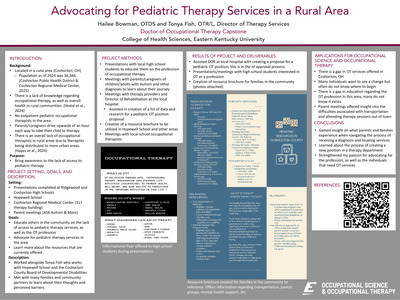
This capstone project was completed with Tonya Fish OTR/L at Hopewell Schools in Coshocton, OH. The primary ACOTE focus areas were education and advocacy, focusing on educating individuals in the community on occupational therapy and the importance of integrating it into the community, as well as advocating for changes to be made to current systems to allow for occupational therapy services to be available to children in the area. In Coshocton, the only opportunities for receiving pediatric occupational therapy services are in the school system or through the county board of developmental disabilities programs like Help Me Grow and Early Intervention. Individuals that do not receive one of these services are traveling out of the area, often over an hour one way, to attend therapy sessions. Through this project, I was able to create connections with local families, educators, and therapy providers to gain insight into the barriers they face when providing or searching for services. I was also able to meet with local high school students to discuss occupational therapy as a profession and ways to get involved as a high school student. Throughout my project outreach, I was able to network with the director of rehabilitation in the local hospital system. We discussed the lack of occupational therapy services, the barriers, as well as what could be done to fix this. I was able to assist with a proposal to create a pediatric occupational therapist position in this hospital system. As a deliverable for my site, I created a “pediatric resource brochure” that lists the various resources for children and families in the area. These resources included transportation, parent groups, therapy providers, mental health support, and many more. This brochure will be displayed at my site, as well as in various locations throughout the community for easy access. This project served as an opportunity to educate and advocate for occupational therapy and the individuals that may need the services.
-
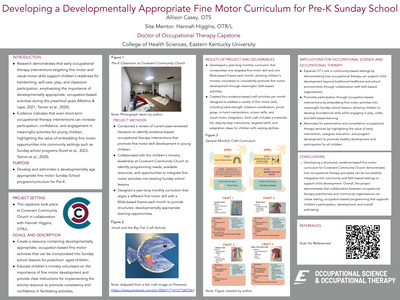
Developing a Developmentally Appropriate Fine Motor Curriculum for Pre-K Sunday School
Allison E. Casey
This Doctor of Occupational Therapy (OTD) Capstone project was completed in a Sunday school program serving preschool-aged children. The purpose of the project was to develop a year-long craft curriculum that promotes fine motor skill development through engaging, developmentally appropriate activities while providing volunteers with easy-to-use resources that integrate with weekly Bible lessons.
A needs assessment, classroom observations, discussions with church leaders and volunteers, and a review of current literature identified limited opportunities for fine motor skill practice within the Sunday school program. In response, a curriculum was developed consisting of four crafts per month, each including supply lists, step-by-step instructions, and Bible lesson connections. Activities were intentionally designed to promote hand strength, grasp, bilateral coordination, cutting, coloring, gluing, and other foundational fine motor skills needed for school readiness and everyday participation.
Project outcomes were evaluated through observations of children's participation and volunteer feedback. Volunteers reported that the curriculum was easy to prepare and implement, increased their confidence in leading activities, and provided an organized, sustainable resource for the program. Children actively participated in the crafts while naturally practicing fine motor skills in a meaningful, play-based environment.
This Capstone demonstrates that integrating fine motor activities into a faith-based preschool program is a practical and sustainable approach to supporting children's development. The project highlights the role of occupational therapy in promoting participation, school readiness, and skill development in community settings beyond traditional healthcare while providing a lasting resource that benefits both volunteers and the children they serve.
-
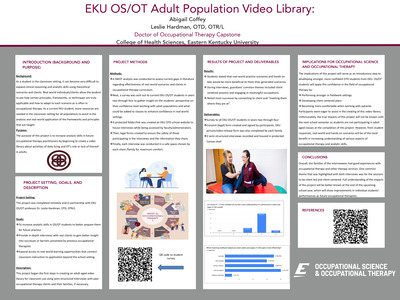
EKU OS/OT Adult Population Video Library
Abigail E. Coffey
As a student in the classroom setting, it can become very difficult to expand clinical reasoning and analytic skills using theoretical scenarios and clients. Real-world individuals/clients allow the student to see how certain principles, frameworks, or techniques are truly applicable and how to adapt to each scenario as is often in occupational therapy. The purpose of this project is to increase analysis skills in future occupational therapy practitioners by beginning to create a video library about activities of daily living and OT's role or lack of thereof in adults. Goals included expanding access to real-world learning opportunities to connect classroom instruction to application beyond the school setting, and to increase analytic skills in OS/OT students to better prepare them for future practice. This project will address a gap in literature discussing the impact on students using real-world scenarios/practice in the classroom.
A survey was created and sent to current EKU OS/OT P2, P3, P4 students to gain insight as to what they feel they need more of in the classroom or what they feel confident in. Students in their P2 – P4 years had a majority consensus of wanting more real-world scenarios/hands on learning with the adult population in the classroom, and overall and a fair (score 3/5) confidence working in the population. Results from this survey were used to build interview questions. Students stated that real-world practice scenarios and hands on labs would be more beneficial to them than generated scenarios. During interviews, guardians’ common themes included client centered sessions and engaging in meaningful occupations. The implications of this project will serve as an introductory step to developing stronger, more confident OTD students from EKU.
OS/OT students will apply this confidence in the field of occupational therapy by performing stronger in fieldwork settings, developing client centered plans, and becoming more comfortable when working with patients. Unfortunately, the true impacts of this project will not be known until the next school semester as students are not participating in adult aged classes at the completion of this project. Overall, the families of the interviewees had good experiences with occupational therapy and other therapy services. One common theme that was highlighted with both interviews was for the sessions to be client led and client centered. Full understanding of the impacts of this project will be better known at the end of the upcoming school year, which will show improvements in individual students’ performances as future occupational therapists.
-
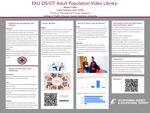
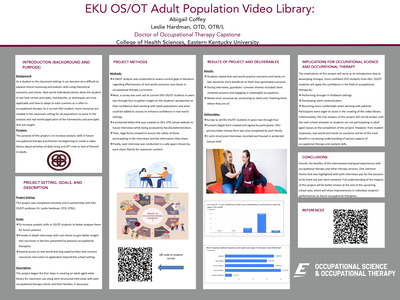
EKU OS/OT Adult Population Video Library
Abigail E. Coffey
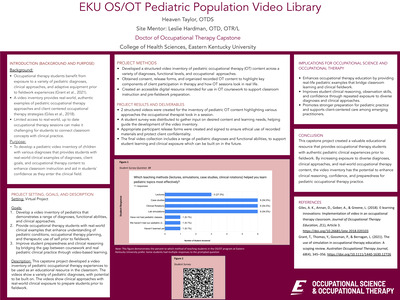
Developing clinical reasoning and analytical skills can be challenging when learning is limited to theoretical case studies. Exposure to real-world clients allows occupational therapy students to observe how clinical principles and interventions are applied while adapting to each individual's unique needs. The purpose of this project was to begin developing a video library demonstrating activities of daily living (ADLs) and occupational therapy's role with adults to strengthen students' clinical reasoning and connect classroom instruction with authentic practice experiences. This project also addresses a gap in the literature regarding the use of real-world learning experiences in occupational therapy education.
A survey was distributed to EKU Occupational Science/Occupational Therapy (OS/OT) students in the P2, P3, and P4 cohorts to identify perceived educational needs. Students expressed a strong desire for more hands-on learning and real-world scenarios involving adult clients and reported only moderate confidence (3/5) when working with this population. Survey findings guided the development of interview questions for participating families. During interviews, common themes emphasized the importance of client-centered, meaningful, and individualized therapy sessions.
This project represents an initial step toward improving student confidence, clinical reasoning, and preparedness for adult practice. Increased access to authentic client experiences may enhance fieldwork performance and the development of client-centered intervention plans. Although the project's full impact cannot yet be evaluated because students have not completed adult-focused coursework, future evaluation will assess its influence on student learning. Overall, participating families reported positive therapy experiences and consistently highlighted the value of client-led, occupation-based care.
-
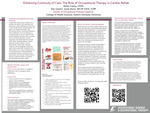
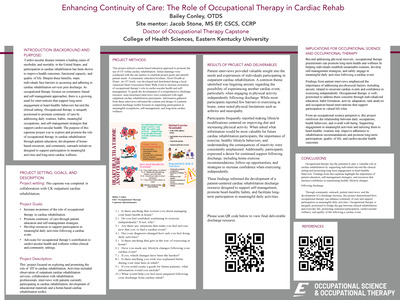
Enhancing Continuity of Care: The Role of Occupational Therapy in Cardiac Rehabilitation
Bailey Conley
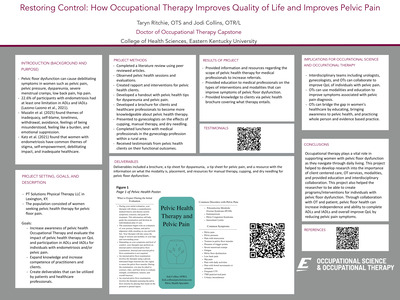
This doctoral capstone project was completed within an outpatient cardiac rehabilitation setting and focused on the ACOTE areas of clinical practice skills, program development, education and advocacy. The purpose of the project was to promote the role of occupational therapy in cardiac rehabilitation while developing resources to support continuity of care following discharge. Project goals included increasing awareness of occupational therapy's role in cardiovascular health, supporting patient self-management, and creating educational resources to facilitate long-term engagement in heart-healthy behaviors and meaningful daily activities. A review of the literature identified cardiovascular disease as a leading cause of morbidity and mortality, while participation in cardiac rehabilitation has been shown to improve functional outcomes and quality of life. However, many individuals experience challenges maintaining healthy lifestyle behaviors after completing formal rehabilitation programs. A needs assessment conducted through consultation with the site mentor and interviews with outpatient cardiac rehabilitation participants revealed concerns regarding confidence exercising independently, lingering anxiety about experiencing another cardiac event, and a desire for practical home-based resources and follow-up support following discharge. To address these needs, an occupational therapy educational brochure was developed and distributed during a local American Heart Association Heart Walk event to promote awareness of occupational therapy's role in heart health and wellness. Semi-structured interviews were conducted with eight outpatient cardiac rehabilitation participants to gather patient perspectives regarding discharge preparedness, barriers to exercise participation, and recommendations for future resources. Information obtained from these interviews informed the development of a comprehensive discharge resource designed to support self-management, safe exercise participation, heart-healthy habits, and engagement in meaningful occupations. This capstone demonstrated leadership through collaboration with my site mentor, development of patient-centered educational materials, implementation of community outreach initiatives, and advocacy for occupational therapy's role in cardiac rehabilitation. The project advanced occupational therapy by highlighting the profession's unique contribution to continuity of care through habit formation, self-management education, health promotion, and occupation-based intervention. Deliverables included a community education brochure, patient interview findings, and a comprehensive cardiac rehabilitation discharge resource. Overall, this capstone addressed identified patient and site needs by providing practical resources to support long-term cardiac wellness beyond the clinical setting. The project demonstrated how occupational therapy can bridge the gap between formal rehabilitation and everyday life, promoting confidence, participation, and sustained engagement in heart-healthy routines.
-
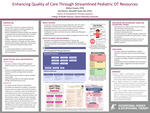
Enhancing Quality of Care Through Streamlined Pediatric OT Resources
Mallori Cooper
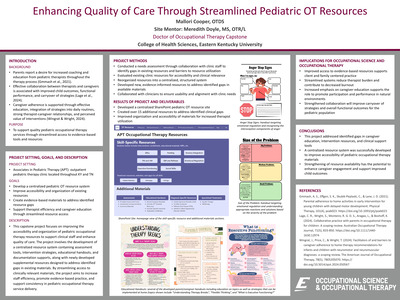
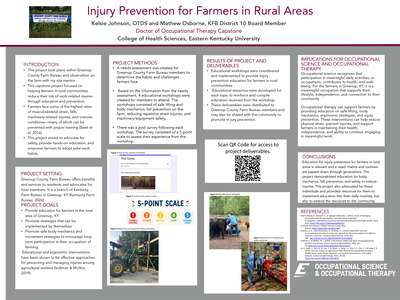
This capstone project focused on improving the accessibility and organization of evidence-based pediatric occupational therapy resources to support clinical staff and enhance quality of care. In pediatric practice, therapists often experience limited time for preparation outside of treatment sessions due to high workloads and administrative demands, which can make it challenging to consistently develop and access caregiver education and intervention resources. At the same time, caregiver education and coaching are essential components of pediatric occupational therapy, as they support carryover of strategies and improved functional outcomes. Through partnership with an outpatient pediatric therapy clinic, Associates in Pediatric Therapy, a centralized resource system was developed. The system includes assessment tools, intervention strategies, educational handouts, and documentation supports, along with newly developed supplemental resources designed to address identified gaps in existing materials. By streamlining access to clinically relevant materials, the project aims to increase staff efficiency, promote evidence-based practice, and support consistency in pediatric occupational therapy service delivery.
-
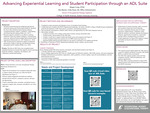
Advancing Experiential Learning and Student Participation through an ADL Suite
Megan E. Craig
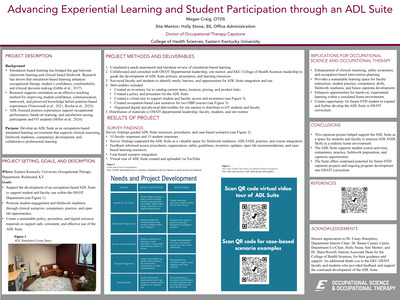
This capstone project was completed within the Occupational Science and Occupational Therapy Department at Eastern Kentucky University. The practice setting was the ADL Suite; a simulated home environment located in the Dizney Building at Eastern Kentucky University. The primary ACOTE focus area(s) applied was program development, with an additional focus area on clinical practice skills. The purpose of this capstone project was to support the development and sustainable use of the ADL Suite as a learning environment for students and faculty to practice ADL/IADL skills, clinical reasoning, activity analysis, assessment, competency development, and fieldwork preparation. A needs assessment and literature review were completed to support the use of simulation-based learning in occupational therapy education. Literature supports simulation as a valuable teaching method for increasing student confidence, comfort, communication, teamwork, and clinical reasoning prior to practice-based experiences (Gibbs et al., 2017; Nieuwoudt et al., 2021; Rocha et al., 2025). The needs assessment concluded there was a need for a more structured, accessible, and purposeful ADL simulation space within the OS/OT Department to support coursework, competency practice, student learning, faculty instruction, student organization use, capstone opportunities, and future program development. To address these needs, several deliverables were developed for the ADL Suite. These included an ADL Suite inventory list, approved policy and procedures, a virtual YouTube video tour, occupation-based case scenarios for two OBP courses, faculty and student surveys, and organized digital and physical materials for future use. Feedback was gathered from students, faculty, Occupational Therapy Interim Department Chair and Department Associate Chair, the site mentor, and EKU College of Health Sciences Interim Associate Dean to guide project development. Project effectiveness was evaluated through completion of deliverables, faculty and student feedback, identification of needs and barriers, and acceptance of the ADL Suite policy and procedures. This capstone project supported personal growth in leadership through collaboration, communication, feedback integration, and program development. This project strengthened the ADL Suite as a functional, sustainable learning space that supports occupational therapy student and faculty use, fieldwork readiness, clinical skill development, and future OTD capstone opportunities.
-
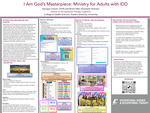
I Am God's Masterpiece: Ministry for Adults with IDD
Kerrigan J. Creech
Executive Summary
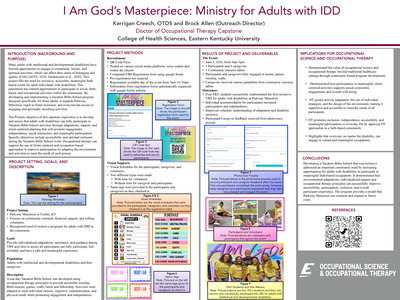
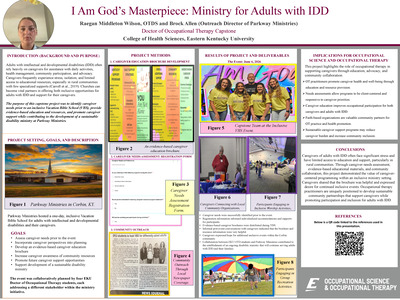
My capstone Accreditation Council for Occupational Therapy Education (ACOTE) focus area included program development, with additional focus on education, advocacy, and leadership. For my Applied Leadership Experience (ALE), I worked with three other occupational therapy graduate students to develop and implement an inclusive Vacation Bible School (VBS) for adults with disabilities at Parkway Ministries. The purpose and overall goal of the project was to increase opportunities for adults with disabilities to participate in an inclusive Vacation Bible School through individualized supports and activity adaptations.
A needs assessment and SWOT analysis were completed and revealed that adults with disabilities have limited opportunities to participate in faith-based and community activities. Although Parkway Ministries had strong community support and interest in the program, barriers such as communication differences, sensory needs, and varying support requirements needed to be addressed. To address these challenges, we planned accommodations, adapted activities, and provided volunteer training before the event.
My role focused on supporting participants before and during the event. I organized registration information, identified accommodations and medical needs, created individualized name tags, and communicated participant needs with volunteers. During VBS, I provided one-on-one support, adapted activities when needed, and helped ensure participants could safely and meaningfully engage in worship, games, crafts, Bible lessons, and fellowship. I also helped educate volunteers by providing strategies to support adults with diverse abilities.
To evaluate the project, participant experiences were collected through Photovoice process, participant feedback, and observations throughout the event. I reviewed the feedback and observations to identify the program's strengths and areas for improvement.
Deliverables for the site included registration forms, participant accommodation plans, activity adaptation guides, volunteer training materials, Photovoice documentation, participant feedback forms, and recommendations for future VBS events.
This capstone experience helped me grow as a future occupational therapist by strengthening my leadership, communication, and problem-solving skills. It also showed how occupational therapy can support participation outside of traditional healthcare settings by making community and faith-based programs more accessible.
Overall, the project provided adults with disabilities an opportunity to participate in an inclusive Vacation Bible School that fostered a sense of belonging and spiritual engagement, while also providing Parkway Ministries with resources to continue the program in the future.
-
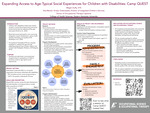
Expanding Access to Age-Typical Social Experiences for Children with Disabilities: Camp QUEST
Megan Duffy
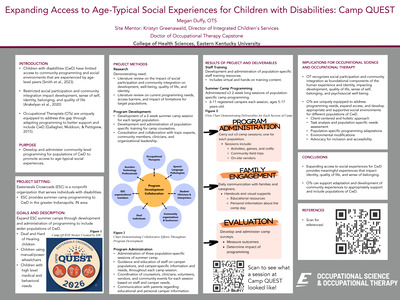
The purpose of this capstone project was to expand access to social participation and community integration experiences for children with disabilities in order to address the gap in access when compared with age-level peers. In order to accomplish this, I developed and administered summer camp programming in partnership with Easterseals Crossroads (ESC), a nonprofit organization that serves individuals with disabilities across the lifespan. In collaboration with a multitude of clinicians, students, topic experts, and organizational members of ESC, I developed camp programming and staff training for Camp QUEST. Following program development, I coordinated and guided the counselors, clinicians, volunteers, students, interpreters, and community experiences throughout the administration of 6 weeks of camp programming. Through developed surveys measuring key outcomes like environment, belonging, quality of life, identity, and social participation, we found our programming to be meaningful and engaging to campers and families, many of which reported an appropriate and accessible environment that met their needs and facilitated an enjoyable social and community experience. The field of occupational therapy is uniquely positioned to address this gap in services and accessibility, as our scope and skillset prepare us to recognize and adapt to the needs of different communities in order to expand access to social experiences. Following the completion of this project, we found Camp QUEST to be successful in expanding access to social experiences for children with disabilities in an appropriate, safe, and supportive environment that can be adapted to meet the needs of each population.
-
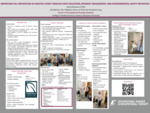
Improving Fall Prevention in Assisted Living Through Resident Engagement, Staff Education and Environmental Safety Initiatives
Sarah Emmons
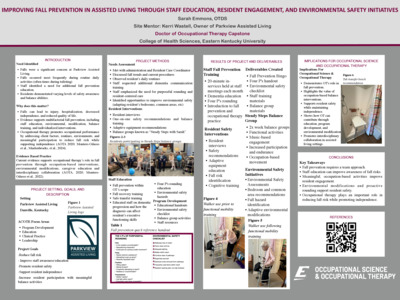
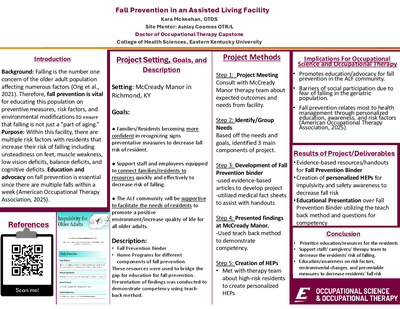
My doctoral capstone project and Applied Leadership Experience (ALE) were completed at Parkview Assisted Living in Danville, Kentucky. The project focused on the ACOTE areas of education, program development, clinical practice, and leadership, with the goal of improving resident safety and independence through evidence-based fall prevention initiatives. A needs assessment was completed through staff interviews, resident observations, collaboration with facility leadership, and a review of current literature. Findings identified opportunities to enhance staff education related to fall prevention, dementia-informed communication, purposeful rounding, and environmental safety. To address these needs, I developed and implemented Steady Steps, a weekly occupation-based balance group that promoted functional mobility, confidence, and social engagement. I also provided individualized resident interventions, including safety recommendations, adaptive equipment education, and environmental modifications. In addition, I developed and presented a staff education program addressing dementia-informed communication, Four P's purposeful rounding, environmental safety, safe transfer techniques, fall recovery, and the role of occupational therapy in assisted living. Sustainable resources, including an environmental safety checklist and Four P's rounding handout, were created to support continued implementation after completion of the project. Project outcomes were evaluated through staff feedback, resident participation, observations, and collaboration with leadership. This capstone strengthened my leadership, collaboration, communication, and program development skills while demonstrating the value of occupational therapy in promoting safety, independence, and quality of life for older adults in assisted living settings.
-
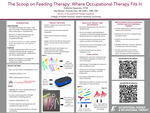
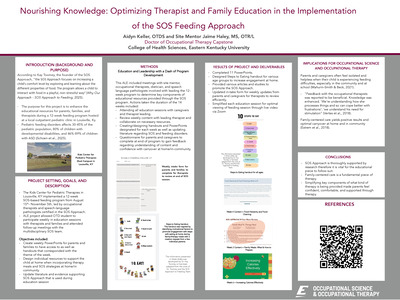
The Scoop on Feeding Therapy: Where Occupational Therapy Fits In
Katherine G. Epperson
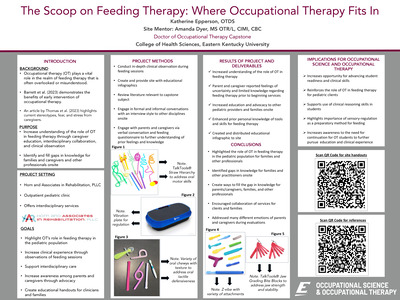
This capstone project was completed at Horn and Associates in Rehabilitation in Lexington, Ky. The primary ACOTE areas of focus included education, advocacy, and clinical practice skills. The goals of this project were to identify and fill gaps in knowledge related to the role of occupational therapy in feeding therapy in the pediatric population, support interdisciplinary collaboration, and create educational handouts to advocate and highlight the importance of occupational therapy in the realm of feeding.
A needs assessment was completed prior to completion of this capstone project in order to identify a need. For this needs assessment, I completed a variety of things including: literature review, in-person observations, questionnaire surveys, and collaboration with other therapy providers in addition to a 12-week fieldwork placement at this site. Findings from the needs assessment found a significant gap in knowledge related to what the role of occupational therapy holds in feeding therapy, anxiety and fear in parents/caregivers, and highlights a need for interdisciplinary collaboration. This capstone project allowed me to identify gaps in knowledge, collaborate with other therapists, create educational handouts, collaborate with parents/caregivers, and extend my existing knowledge and skills.
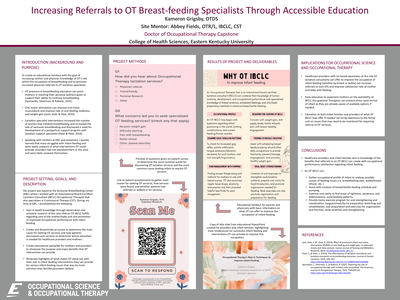
Effectiveness of this capstone project was evaluated through collaboration with parents and caregivers via in session conversations and observations across the span of 14 weeks as well as results from a self-developed questionnaire given to parents and caregivers. Educational infographics were created and distributed onsite to support continued education and advocacy for parents/caregivers as well as other professionals.
Leadership was demonstrated during this capstone project by placing myself in a position to be the facilitator of communication between parents/caregivers and other professionals within the primary care of their child. I utilized the foundational skills to address emotions of fear and anxiety in new parents/caregivers at evaluation to advocate and highlight the importance of the role of an occupational therapist. This capstone advanced occupational science and therapy by reinforcing the role of occupational therapy, supporting the use of clinical reasoning skills, use of knowledge of pediatric development, and highlighting sensory-regulation.
-
Swing Bed Orientation Packet: Onboarding education for new staff and patients/families covering therapy expectations, interdisciplinary roles, and patient-centered care.
Shayla M. Gibson
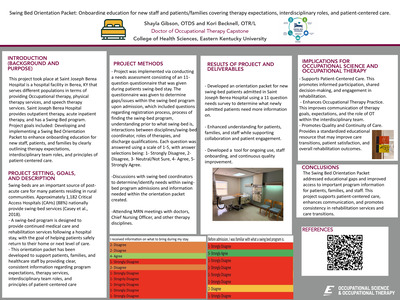
My Doctor of Occupational Therapy (OTD) Capstone and Applied Leadership Experience (ALE) was completed at Saint Joseph Berea Hospital in Berea, Kentucky, with primary ACOTE focus areas in program development, leadership, and education. The purpose of this project was to develop and implement a standardized Swing Bed Orientation Packet to improve onboarding education for newly admitted swing-bed patients, their families, and staff.
A needs assessment, patient survey, and discussions with swing-bed coordinators and interdisciplinary team members identified gaps in patient and family education. An 11-question survey evaluated patients' understanding of the swing-bed program, therapy services, interdisciplinary roles, and discharge planning. The findings supported the need for consistent, accessible educational resources.
In response, a comprehensive orientation packet was developed to explain program expectations, rehabilitation services, team member roles, discharge planning, and patient-centered care principles. The packet was designed as a sustainable resource to improve communication, promote patient engagement, and provide consistent education for patients, families, and newly hired staff.
Project effectiveness was evaluated through survey findings, stakeholder feedback, and collaboration with interdisciplinary team members. Key deliverables included the completed orientation packet and educational materials that can be incorporated into future staff onboarding and quality improvement initiatives.
Throughout the experience, I demonstrated leadership by collaborating with healthcare professionals, engaging stakeholders, participating in interdisciplinary meetings, and advocating for patient-centered care. This project strengthened my skills in program development, communication, education, and leadership while contributing to improved patient understanding, rehabilitation engagement, and smoother care transitions within the swing-bed program.
-
Enhancing Mental Health Support for Motor Vehicle Accident (MVA) Survivors Through Occupational Therapy (OT)-Led Support Groups
Emma K. Gooden Ms
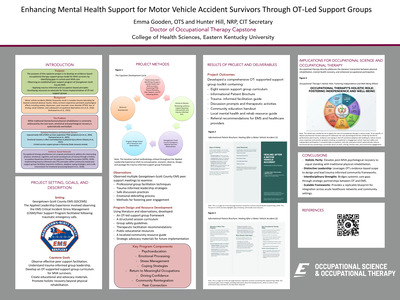
This doctoral capstone project, completed during a 14-week Applied Leadership Experience (ALE) with Georgetown-Scott County EMS (GSCEMS), focused on the ACOTE target areas of Program Development and Advocacy by creating an evidence-based, trauma-informed, occupational therapy support group curriculum for motor vehicle accident (MVA) survivors. A literature review and needs assessment identified a significant gap in post-crash care, as many survivors experience long-term psychological challenges—including PTSD, anxiety, depression, fear of driving, and disruptions in daily roles—despite care often emphasizing physical rehabilitation over emotional recovery. Drawing from observations of GSCEMS Peer Support and Critical Incident Stress Management meetings, current evidence, and ongoing mentor feedback, this project developed an eight-session support group curriculum addressing emotional processing, stress management, coping strategies, return to meaningful occupations, driving confidence, and community reintegration. Additional deliverables included a trauma-informed facilitation guide, therapeutic activities, referral recommendations, a local mental health resource guide, patient education materials, and community outreach resources. Although the program was not implemented during the ALE, it was refined through clinical consultation to create a reproducible framework that strengthens collaboration between occupational therapy and emergency medical services while promoting holistic recovery for MVA survivors. Inspired by the loss of the author's best friend in a motor vehicle accident, this project advocates for integrating mental health support into post-accident care and highlights occupational therapy's unique role in addressing the physical, emotional, cognitive, and social effects of trauma.
-
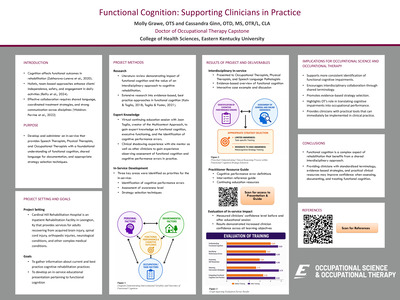
Functional Cognition: Supporting Clinicians in Practice
Molly Grawe
This doctoral capstone was completed at Cardinal Hill Rehabilitation Hospital, an inpatient rehabilitation facility (IRF) serving adults with neurological, orthopedic, and medically complex conditions. The project focused on education and clinical experience. Its purpose was to develop and implement an evidence-based educational program on functional cognition while gaining a deeper understanding of cognitive rehabilitation in the inpatient rehabilitation setting. The overall goal was to improve clinicians’ understanding of functional cognition and provide practical resources to support evidence-based practice.
Functional cognition refers to cognition within the context of everyday occupational performance. It reflects the interaction among personal factors, task demands, and the environment. Because cognition influences functional performance and rehabilitation outcomes, it is an essential component of inpatient rehabilitation. A literature review and clinical observations identified opportunities to improve clinician education and increase the use of evidence-based approaches to functional cognition.
In response, an interdisciplinary in-service presentation was developed using current evidence and clinical observations. The presentation emphasized identifying cognitive performance errors, understanding the role of self-awareness in rehabilitation, and selecting evidence-based intervention strategies. A practitioner’s resource guide accompanied the presentation, and pre- and post-evaluations assessed changes in clinicians’ confidence and understanding.
This capstone also provided opportunities to demonstrate leadership through interdisciplinary education and collaboration with occupational therapists and other rehabilitation professionals. Overall, the project addressed an educational need by providing clinicians with practical knowledge and resources to improve functional cognition in clinical practice. It supports more consistent identification of cognitive performance errors, encourages interdisciplinary collaboration through shared terminology, and reinforces occupational therapy’s important role in helping individuals return to meaningful occupations.
-
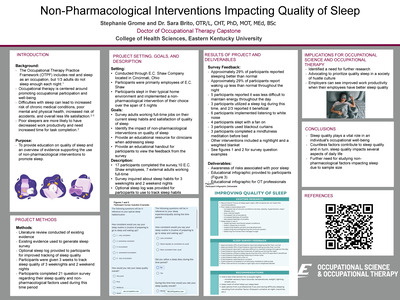
Non-Pharmacological Interventions Impacting Quality of Sleep
Stephanie Grome
This doctoral capstone/ALE project was a quality improvement project completed at E.C. Shaw Company in Cincinnati, Ohio. The primary ACOTE focus area was health promotion and wellness, emphasizing the role of occupational therapy in improving sleep as an essential occupation that supports overall health, productivity, and quality of life. The goal was to determine participants’ current sleep satisfaction and determine what, if any, non-pharmacological interventions impact sleep quality among adults working full time jobs.
The literature review identified the importance of quality sleep and explored several pharmacological interventions and interventions specific for conditions.However, minimal evidence exists examining non-pharmacological factors for the general adult working population, therefore establishing a need for further exploration. The review of current literature influenced the development of the survey which 17 participants completed by tracking their sleep habits over three weeknights and two weekend nights while implementing non-pharmacological interventions of their choice. The survey consisted of twenty one questions regarding their sleep habits before and after the use of a non-pharmacological intervention of their choice while in their home environment. The survey responses indicated approximately 29% of participants reported improved sleep quality and fewer nighttime awakenings, while several participants also reported improved daytime energy and found the sleep log beneficial.
This capstone highlights sleep as an essential occupation that directly impacts the population’s overall well-being and occupational participation. By promoting evidence-based, non-pharmacological sleep interventions, the project reinforced occupational therapy's unique role in health promotion, prevention, and workplace wellness.
-
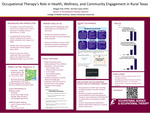
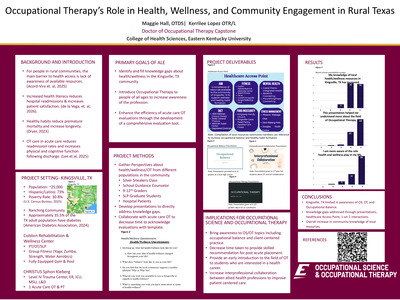
Occupational Therapy’s Role in Health, Wellness, and Community Engagement in Rural Texas
Maggie Hall
This Applied Leadership Experience (ALE) and Doctoral Capstone was completed at Colston Physical Rehabilitation & Wellness Center in Kingsville, Texas. The primary ACOTE focus areas addressed were advocacy and education. This capstone aimed to explore community perspectives on health and wellness while identifying gaps in health knowledge and access to community resources and streamline acute care evaluations to minimize readmission rates.
A needs assessment was conducted through community health and wellness questionnaires, stakeholder collaboration, and review of local demographic and health data. Kingsville, TX is a rural community with higher-than-average rates of poverty and obesity. Findings revealed a need for increased health education, greater awareness of available community resources, and improved access to information related to wellness and preventative healthcare.
To address these needs, educational presentations, community outreach initiatives, and resource-based interventions were developed and implemented. Additionally, an acute care occupational therapy evaluation template was created to support more efficient acute care evaluations. Outcomes demonstrated increased awareness of local wellness resources, improved understanding of occupational therapy services, and increased efficiency in acute care occupational therapy.
Each deliverable was developed through an occupational therapy lens, emphasizing occupational balance, health promotion, and client-centered education. This capstone contributed sustainable resources for the site while empowering community members with knowledge and strategies to prioritize health and wellness. Through advocacy, education, and program development, the project demonstrated occupational therapy's valuable role in promoting community health and participation.
-
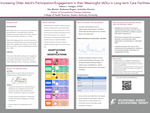
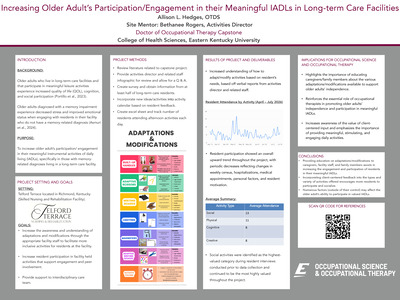
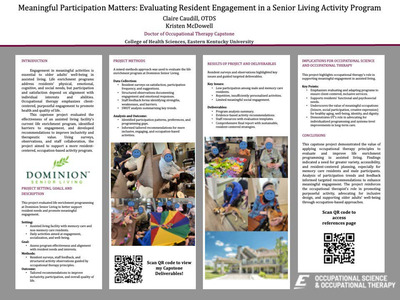
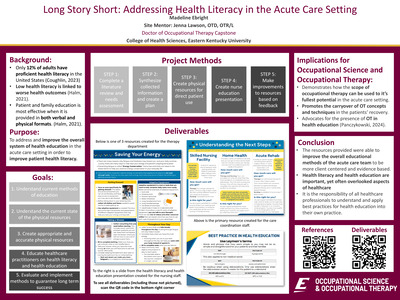
Increasing Older Adult's Participation/Engagement in their Meaningful IADLs in Long-term Care Facilities
Allison L. Hedges
My doctoral capstone and Applied Leadership Experience (ALE) were completed at Telford Terrace, a skilled nursing and rehabilitation facility in Richmond, Kentucky. My capstone focused on education and program analysis, with the goal of increasing participation in meaningful instrumental activities of daily living (IADLs) among older adults, particularly those with memory-related diagnoses. This was accomplished by educating staff on activity adaptations and environmental modifications while incorporating resident feedback into activity planning.
Following a needs assessment, literature review, and stakeholder interviews, I identified barriers to participation, including limited staffing, varying resident interests, and differences in physical and cognitive abilities. To address these barriers, I conducted resident interviews to identify preferred activity types, shared the findings with the Activities Director to guide programming, and tracked afternoon activity attendance from April through July to evaluate participation trends. I also developed an educational infographic highlighting adaptive equipment, activity modifications, and environmental adaptations and provided staff education to promote implementation of these strategies.
Throughout the experience, I demonstrated leadership through interdisciplinary collaboration, resident advocacy, initiative, accountability, and effective time management. By working closely with facility staff and promoting evidence-based occupational therapy interventions, I helped increase staff confidence in implementing individualized adaptations that support occupational engagement.
Overall, the project resulted in increased resident participation in facility-sponsored activities and improved staff understanding of strategies to support residents with complex physical and cognitive needs. This experience reinforced the essential role of occupational therapy in promoting independence, meaningful participation, and quality of life through client-centered, occupation-based interventions.
Printing is not supported at the primary Gallery Thumbnail page. Please first navigate to a specific Image before printing.