
Files
Download Poster (9.2 MB)
Description
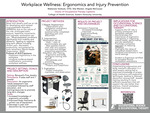
This Capstone project, Workplace Wellness: Ergonomics and Injury Prevention, was completed in a local retail jewelry store as part of an Applied Leadership Experience (ALE) with a primary focus of health promotion and wellness as outlined by ACOTE Standards. This project aimed to address the high risk of work-related musculoskeletal disorders (WRMSDs) among jewelers and sales staff due to prolonged static postures, repetitive hand movements, and improper workstation set-ups.
The primary goals of my project were to 1) improve participant knowledge of ergonomic principles and injury prevention strategies, 2) enhance knowledge of proper body mechanics and workstation set-up, and 3) reduce discomfort while promoting long term workplace wellness. A needs assessment was completed (personal interviews, questionnaires, and observations done by project leader) and identified that staff in precision based occupations are at increased risk for chronic pain and injury when ergonomics are lacking, this includes all staff (handling and displaying jewelry, repairing jewelry, cleaning jewelry, and typing).
To address all issues identified, a multifactored intervention was implemented. Project methods included ergonomic workstation set up observations using knowledge from OT based frames of reference and certifications completed by the project leader, staff education session, and individualized workstation modifications. Education focused on posture, body mechanics, microbreaks, and stretching. The effectiveness of the methods was evaluated through pre/post questionnaires, and observation of workstation set up changes and their effectiveness.
Many key deliverables were developed and executed throughout. These deliverables were designed for the site specifically to continue supporting sustainability of the methods put into place. These include an ergonomic/body mechanic visual poster displayed throughout the site, educational training on new materials and equipment for both sales staff and jeweler, ergonomic basics PowerPoint, and a workstation assessment checklist. All resources were designed to be effortlessly implemented and maintained by the staff after the conclusion of the capstone.
Throughout the capstone and ALE, leadership was demonstrated through intervention development, staff education and collaboration, and advocacy for workplace wellness initiatives. The project leader assumed a personal leadership role in completing this capstone project by identifying workplace needs, designing evidence-based interventions, and promoting prevention of WRMSDs.
This capstone can help to advance the occupational therapy practice by emphasizing the role of OT in primary prevention, workplace wellness, and ergonomic intervention in a non-traditional setting. It highlights how occupational therapy can proactively address risk factors before injuries occur, rather than focusing on rehabilitation after injury occurs.
This project successfully met the needs previously identified by the project leader and of the staff by improving ergonomics, promoting body mechanics, and setting staff up for long-term success. Employees also learned more about the role of OT, while improving their quality of life in the workplace. For the project leader, the experience to lead a group of individuals and enhance clinical reasoning met the wants and needs of the capstone project.
Overall the capstone project demonstrates the values of occupational therapy in promoting a healthy life, preventing injuries, and supporting long-term participation and productivity in the workplace.
Graduation Date
2026
Keywords
Occupational Therapy, Ergonomics, Workplace Wellness
Disciplines
Occupational Therapy
Degree Type
Book
Site Mentor
Sarah Brito OTR/L

Comments
Link to presentation: https://youtu.be/eLzZaIMYrQI