
Files
Download
Download Poster (550 KB)
Description
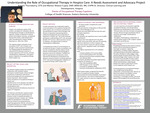
This advocacy and education capstone project used a needs assessment questionnaire and literature review to evaluate perceptions of occupational therapy in hospice care. Findings guided the development of educational resources aimed at increasing awareness, supporting appropriate referrals, and promoting occupational therapy as an integral member of the hospice interdisciplinary team.
Graduation Date
2026
Keywords
Hospice, Referrals, Occupational Therapy
Disciplines
Occupational Therapy
Degree Type
Book
Site Mentor
Sheena Cupid

Comments
This doctoral capstone project was completed in collaboration with Amedisys Hospice and focused primarily on the Accreditation Council for Occupational Therapy Education (ACOTE) focus area of Research, with a secondary focus in Advocacy. The purpose of the project was to examine current perceptions of occupational therapy (OT) in hospice care, identify barriers to OT utilization, and develop resources to increase awareness of OT's role within the hospice interdisciplinary team.
A review of the literature found that occupational therapy can improve quality of life for hospice patients and caregivers through caregiver education, environmental modifications, meaningful engagement, comfort, and strategies that support independence. Despite these benefits, OT remains underutilized due to limited awareness, inconsistent referral practices, reimbursement challenges, and misconceptions about the profession's scope.
To better understand these barriers, a needs assessment was conducted using an electronic questionnaire distributed to hospice clinical managers and directors of operations at Amedisys Hospice. Survey findings aligned with the literature, revealing that while participants recognized OT's value, referrals remained infrequent because of limited understanding of OT services, inconsistent referral practices, reimbursement concerns, and limited service availability.
Project deliverables included an educational handout outlining OT's role in hospice care, advocacy materials for hospice leadership and interdisciplinary team members, recommendations to improve referral practices, and a capstone poster and presentation summarizing the findings.
This capstone strengthened my skills in research, evidence-based practice, collaboration, and advocacy while demonstrating how research can identify practice gaps and guide meaningful solutions. Ultimately, the project provides practical resources to support earlier OT involvement and improve quality of life for hospice patients and their caregivers.
https://youtu.be/XDM911PXhJk?is=GqYRKW7gzZyX2IxB